Authorized Blue Alpine resellerEvery dryer ships with pump, trays, mats & mylar bagsMedium Select from $2,995 · Large Select from $3,995Questions? Call +1 (443) 514-5708Authorized Blue Alpine resellerEvery dryer ships with pump, trays, mats & mylar bagsMedium Select from $2,995 · Large Select from $3,995Questions? Call +1 (443) 514-5708
“Medium Select” has been added to your cart. View cart
Blue Alpine Freeze Dryers · Authorized Reseller
Lock inthe harvest.Keep it for years.
Lock in the harvest. Keep it for years.
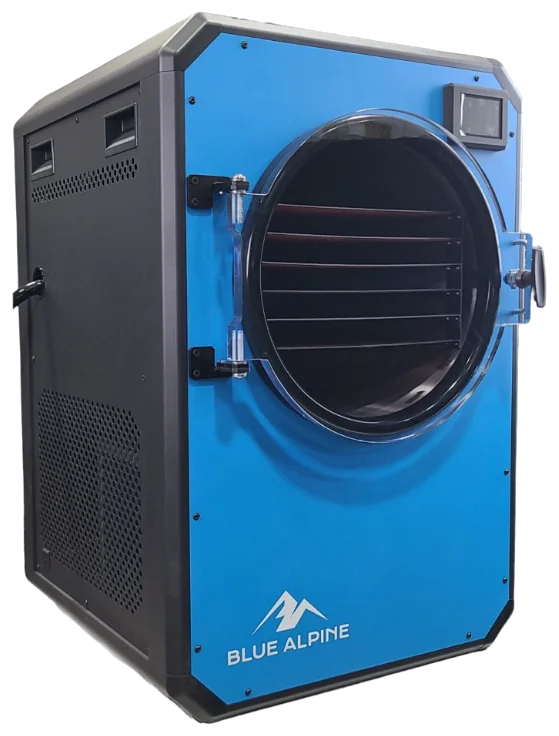
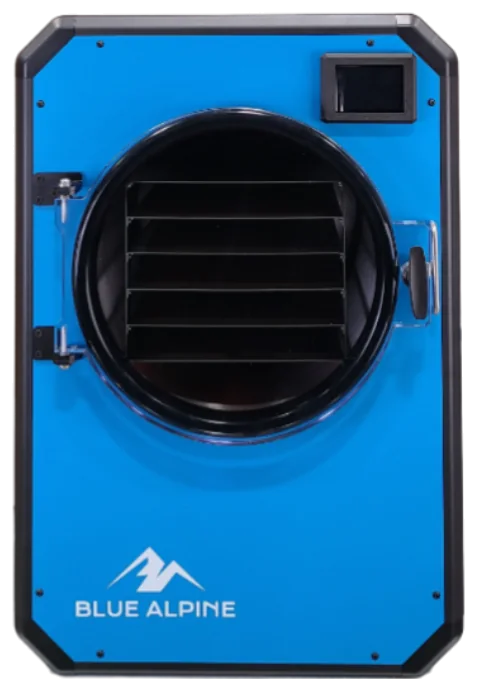
Blue Alpine Medium and Large home freeze dryers, with five stainless trays, a 1-inch acrylic door and pre-programmed recipes. Sold, shipped and supported by Summit Freeze Supply.
Still deciding? We can talk you through sizing, power and setup.
What power do the dryers need?
The Medium runs on a standard 120V, 15-amp wall outlet. The Large needs a 20-amp breaker and a 20-amp receptacle, and most household outlets are 15-amp, so check your circuit before delivery.
Medium or Large: which should I choose?
The Medium averages 8 lbs per 24 hours on five 9″ × 13″ trays. The Large doubles the tray area and averages 16 lbs.
How long does a cycle take?
Average cycles run 12–20 hours, depending on how much you load and what you are drying.
What comes in the box?
Every freeze dryer ships with a premium vacuum pump and oil, five stainless steel trays, five silicone mats, 50 mylar bags, 50 oxygen absorbers and an impulse sealer.
Do you sell replacement parts?
Yes. Vacuum pump, refrigeration, electronics, body and door, plumbing and fastener parts are listed individually by SKU in the Parts shop.
Buyer’s guide
Everything you need to know before you buy, from sizing and power to storage and maintenance.
Blue Alpine freeze dryers pull the water out of food at home, so a batch of strawberries or a pot of chili can sit in a sealed bag on a shelf instead of taking up freezer space. There are two Blue Alpine freeze dryers, the Medium Select and the Large Select. Summit Freeze Supply is an independent, authorized reseller of both. We also carry accessories, and replacement parts by Blue Alpine part number. Below: how the machines are built, how the sizes compare, and what each one needs from your wiring. Further down are running costs and how to store what you make.
Blue Alpine builds its machines in Idaho. The frame is extruded aluminum. The door is a 1-inch-thick acrylic panel, so you can watch the trays for the whole cycle without opening anything. Every vacuum fitting is barbed (no crimped fittings), and threaded joints are sealed with gasket material rather than Teflon tape.
For refrigeration, Blue Alpine freeze dryers use R1270, a natural refrigerant based on propane. Blue Alpine describes it as future-proof compared with R404 or R410. A circulating fan inside the chamber pushes cold air across the trays to blast-freeze the food. Also inside the chamber is a P100 filter, the 3M 2097, which stops particles from reaching the vacuum pump. We sell that filter in packs of two.
The software runs on PID control and solid-state relays. It arrives with food recipes already programmed, and you can change every one of them, including the pressure limit each recipe works to. On the vacuum side, a solenoid in the pump keeps oil from flowing back into the chamber.
The Large Select, the bigger of the two Blue Alpine freeze dryers.
Comparing the two Blue Alpine freeze dryers
Both Blue Alpine freeze dryers run the same software and come with the same kit. They differ in size and in the power they pull. Every figure below is Blue Alpine’s own.
Specification
Medium Select
Large Select
Trays
Five 9″ × 13″ (quarter-sheet)
Five 13″ × 18″ (half-sheet)
Average output
About 8 lbs per 24 hours
About 16 lbs per 24 hours
Most per batch
Up to 15 lbs (about 1 gallon)
Up to 25 lbs (about 2 gallons)
Size (W × D × H)
20″ × 21″ × 30″
24″ × 25.5″ × 34″
Weight with pump
110 lbs
130 lbs
Circuit
120V, standard 15A outlet
120V, 20A breaker and 20A receptacle
Maximum draw
13 A (1,560 W)
17 A (2,040 W)
Average draw
9 A (1,080 W)
12 A (1,440 W)
Average cycle
12–20 hours
12–20 hours
Price
$2,995
$3,995
Medium Select
The Medium Select plugs into an ordinary 15-amp, 120V outlet. For a lot of homes, that settles it. Its five trays are 9 × 13 inch quarter-sheets, a standard pan size. The bottom tray gets a higher-wattage heating pad than the others so it holds the same temperature as the trays above it. Blue Alpine also runs each Medium through several hours of QC testing before it leaves the factory. With the pump it weighs 110 lbs, so use a counter or cart rated for that.
Large Select
The Large Select has exactly twice the tray area of the Medium, on five 13 × 18 inch half-sheet trays. Blue Alpine puts its average at about 16 lbs of food every 24 hours, and one batch can go up to 25 lbs. The compressor is a 1/2 HP Cubigel with 14.3cc displacement. Blue Alpine says that gives roughly 28 to 43% more cooling capacity than competitor brands. The trade-off is power. It peaks at 17 amps, more than a 15A circuit is rated for, so it needs a 20A circuit.
Price, and what’s included with Blue Alpine freeze dryers
The Medium Select is listed at $2,995 and the Large Select at $3,995. The product page always has the current figure. Each machine comes as a full kit:
The freeze dryer
The premium vacuum pump, plus pump oil
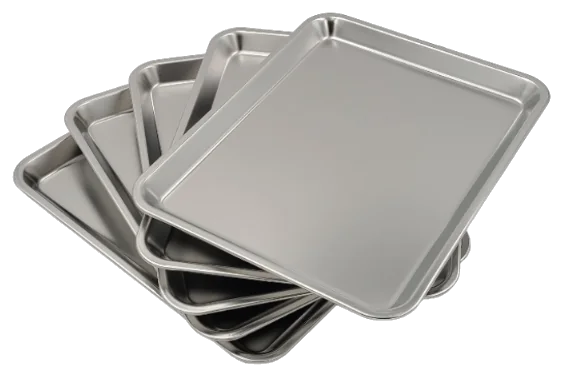
Five stainless steel trays
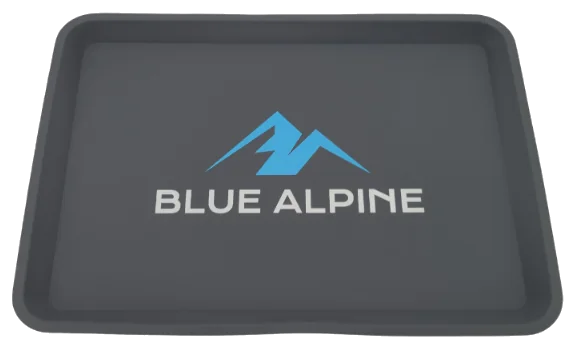
Five silicone mats
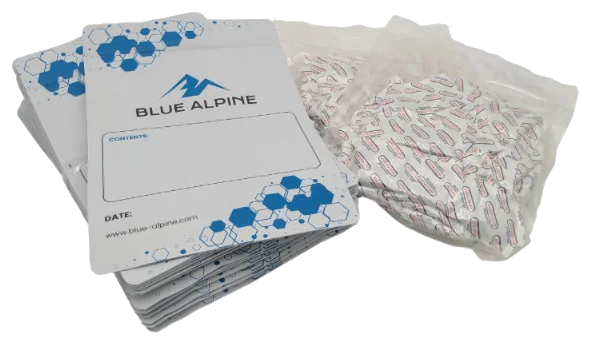
50 mylar bags and 50 oxygen absorbers
An impulse sealer for closing the bags
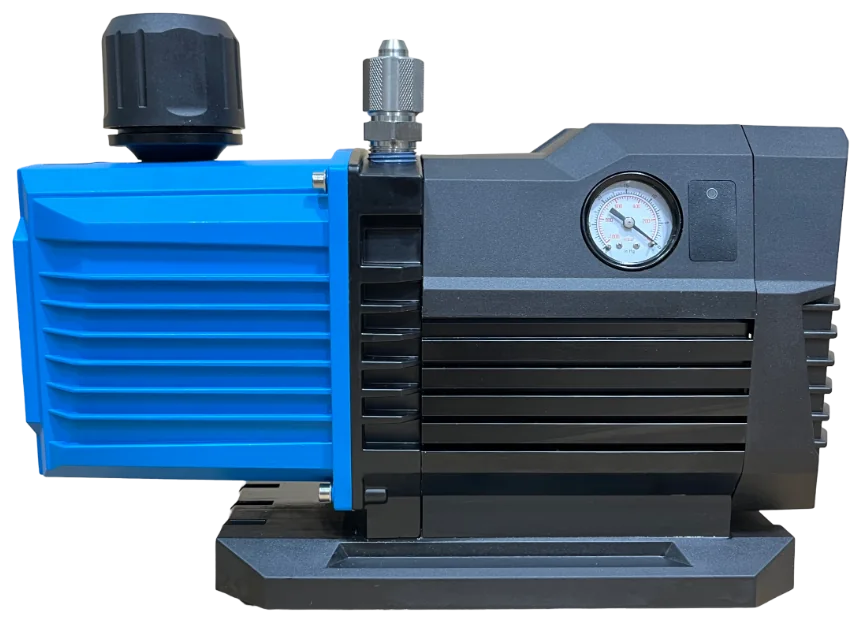
That’s enough for a first batch, start to sealed bag. The pump in the kit is the same model we sell on its own: a double-stage, oil-sealed rotary vane pump with a 3/4 HP brushless motor and a built-in analog vacuum gauge. It is not an oil-free pump, which is why oil comes with it. Extra bags and trays are under accessories when you need them.
How Blue Alpine freeze dryers work
Freeze drying, or lyophilization, takes the water out of food without cooking it. At very low pressure, ice turns straight into vapor. That’s called sublimation, and the Wikipedia entry on freeze drying has the physics if you want them. On these machines the recipe runs three stages in order. You don’t time anything yourself.
Freezing
Spread the food in an even layer, slide the trays in and close the door. The refrigeration takes the chamber well below freezing while the fan circulates air. The water in the food turns to ice.
Primary drying
Now the vacuum pump drops the pressure in the chamber. The ice sublimates instead of melting, so the food holds its shape. Most of the cycle is spent here.
Final drying
A small amount of heat goes into the trays to drive off the moisture that’s left. Average cycles on Blue Alpine freeze dryers run 12 to 20 hours from start to finish. Thin apple slices sit at the short end. A full load of stew sits at the long end.
Power and placement
Check the outlet before the machine arrives. With the Large, it’s the part of setup most likely to need an electrician.
Medium Select: 120V on a standard 15A household outlet. It peaks at 13 amps and averages about 9 amps, or 1,080 watts.
Large Select: 120V on a 20A breaker, plugged into a 20A receptacle. Most household outlets are 15A, so look at both the breaker and the outlet. It peaks at 17 amps and averages about 12 amps, or 1,440 watts.
Both Blue Alpine freeze dryers want a level surface that will carry 110 to 130 lbs. Leave air space around the cabinet and room beside it for the pump, which measures 13.9 × 5.4 × 12.3 inches. Keep the hose between them short. Blue Alpine warns that hoses longer than 5 feet tend to cause errors. Room temperature matters too, because the refrigeration dumps its heat into the room. A hot garage in August usually means longer cycles.
Of the two Blue Alpine freeze dryers, the Medium is the one that runs on a 15-amp outlet.
What a batch costs in electricity
Power is the main running cost of Blue Alpine freeze dryers. Multiply the average draw in kilowatts by the hours in the cycle, then by your rate. Here’s that math at $0.15 per kWh and a 20-hour run:
Medium Select: 1.08 kW × 20 h = 21.6 kWh, or about $3.24.
Large Select: 1.44 kW × 20 h = 28.8 kWh, or about $4.32.
Treat those as rough numbers. They come from Blue Alpine’s average draw, not from a meter on your machine. A 12-hour fruit batch in the Medium works out nearer $1.94. Dense loads and a warm room push the figure up. The other things you’ll keep buying are pump oil, mylar bags and oxygen absorbers.
Blue Alpine freeze dryers next to other ways of keeping food
Freezing keeps food well, but only while the freezer runs. Freeze-dried food sits on a shelf.
Canning works for a lot of foods. It also cooks them, which changes texture, and it takes careful technique.
Dehydrating uses warm air and costs less to start. The result is usually chewier and doesn’t rehydrate the same way.
Freeze drying removes most of the water at low temperature, so food keeps its shape and comes back close to its original texture.
You don’t have to pick one. Blue Alpine freeze dryers make sense alongside a freezer when you want light food that keeps without power: trail meals, an emergency pantry, a glut of garden peppers, a deer that won’t fit in the chest freezer.
Getting the first batch right
On Blue Alpine freeze dryers, the first run should be a boring one.
Pick something easy. Sliced strawberries, bananas or diced apple dry reliably, and you’ll learn what finished food should look and feel like.
Use the mats. Sticky food bonds to bare steel. Silicone peels away from it.
Pre-freeze if you can. Trays that go in already frozen can shorten the cycle.
Stay below the rim. One even layer. No heaps.
Test the thickest piece. Break it open at the end. If the middle is cool or soft, it needs more time.
Write down what went in and how long it took. After five or six batches you’ll know how your machine behaves in your room.
What to put in Blue Alpine freeze dryers
Most foods with a moderate amount of fat and sugar freeze dry well:
Strawberries, apples, bananas, peaches and blueberries
Peas, corn, green beans and diced peppers
Cooked meat, chili, soups and stews
Whole meals and leftovers, portioned before they go in
Herbs, yogurt drops and dairy snacks
Candy, which puffs up and turns crunchy
Leave out things that are nearly all fat or sugar. Butter, honey, jam and syrup won’t dry properly. Cut everything else into even, bite-sized pieces, because thin layers dry faster and more evenly than thick ones.
Blue Alpine freeze dryers come with 50 mylar bags, 50 oxygen absorbers and an impulse sealer.
Storing food from Blue Alpine freeze dryers
Dry food only stays shelf-stable while moisture and oxygen stay out. Oxygen is the main cause of spoilage in freeze-dried food, since the oils in it can oxidize on their own. That’s why the kit has mylar and oxygen absorbers in it, not plastic zip bags.
The bags we sell separately are 8 × 12 inches and 7 mil thick, with a gusseted bottom, and each one holds about 2 quarts. Their aluminum layer is 12 microns. A higher ratio of aluminum to plastic is what stops oxygen getting through. The bags block odors too, onion included. Each pack of 50 comes with 50 oxygen absorbers rated at 300cc.
Let the cycle finish, then check the thickest pieces.
Bag the food soon after, before it picks up moisture from the air.
Drop one oxygen absorber in each bag and close it with the impulse sealer.
Write the contents and the date on the bag.
Keep it somewhere cool and dark, away from damp.
Skip clear-front bags, which don’t work for freeze-dried food. Glass canning jars do work. They’re heavier and they can break, but you can reuse them. Sealed and stored properly, a lot of freeze-dried food keeps for years. For home preservation safety in general, check the National Center for Home Food Preservation.
Accessories and replacement parts for Blue Alpine freeze dryers
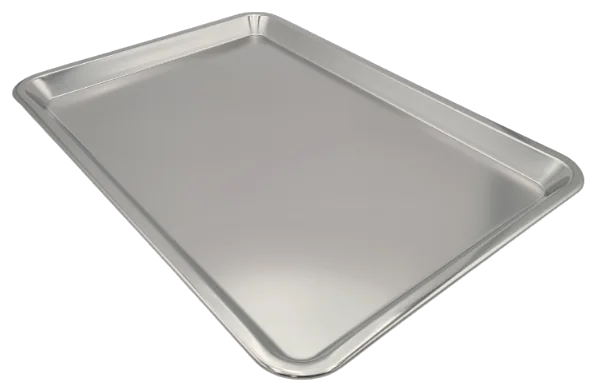
Once you’re running batches back to back, a spare set of medium trays lets you load the next batch while the current one runs. That set is five 9 × 13 inch quarter-sheets in 304 stainless. Large trays are 13 × 18 inch half-sheets, a standard baking-sheet size, so extra pans are easy to find at a kitchen store. One catch with the large silicone mats: they fit Blue Alpine’s current tray only, not trays shipped before December 2024.
For repairs, the replacement parts section lists each part for Blue Alpine freeze dryers under its Blue Alpine part number. It’s split into four groups:
Electronics: PCB boards, a 3.5-inch touch screen, a PT1000 temperature sensor, a cooling fan, switches, connectors and cables
Body and doors: a stainless pull handle and a T-handle latch
Plumbing and filters: vacuum and drain hose sold by the foot, and 3M 2097 P100 filters
Fasteners and tools: screws, nuts, rivets and spacers in packs of 10, plus a T20 Torx driver and a 5 mm hex key
The double-stage pump that comes with Blue Alpine freeze dryers. It runs on oil.A second tray set means the next batch is ready to go in.
Looking after Blue Alpine freeze dryers
Upkeep on Blue Alpine freeze dryers is mostly cleaning and oil.
Pump oil. The pump is oil-sealed, so the oil is doing real work. Check it regularly and change it when it looks cloudy or dark. Your manual has the procedure.
The door. Wipe the acrylic and the face it closes against after each batch. A crumb there can stop the chamber reaching full vacuum.
Draining. After the defrost, drain the water and close the drain before you start again.
Hose and fittings. Look for cracks and loose ends. If your hose is longer than 5 feet, shorten it.
The P100 filter. It keeps particles out of the pump, so look at it when you clean the chamber.
Vents. Keep them clear. The refrigeration has to get rid of its heat somewhere.
When something wears out, find the part number in your owner’s manual or on the part itself, then search the catalog for it. If the manual has gone missing, we sell a printed copy for $5, and Blue Alpine offers it as a PDF.
Reading reviews of Blue Alpine freeze dryers
Read reviews for the details, not the star rating. Look at:
Which model. A Medium owner and a Large owner expect different capacity, and they need different outlets.
What was on the trays. A long cycle on a full load of stew tells you very little about fruit.
The install. Some complaints could be setup issues, like a Large on a 15A circuit or a hose longer than the 5 feet Blue Alpine recommends.
The fix. See whether the owner could get the part, and how long the repair took.
No review knows your outlet or your floor space. Settle those with a tape measure and a look at the breaker panel before you order.
Why buy Blue Alpine freeze dryers from Summit Freeze Supply
We’re an authorized reseller, and the machines sit in the same catalog as their supplies and parts. So when you need bags and a fan, it’s one order. When a part number doesn’t match, there’s one place to ask.
Full kits. Both Blue Alpine freeze dryers come with the pump and oil, trays, mats, bags, absorbers and a sealer.
Parts by number. Every replacement part is listed under its Blue Alpine part number.
Someone to ask. Call +1 (443) 514-5708, or send a message from the contact page.
Are Blue Alpine freeze dryers hard for a beginner?
No. The pre-programmed recipes cover common foods, so a first batch mostly means loading trays and choosing a recipe. Editing settings can wait until you know how your machine runs.
Which of the Blue Alpine freeze dryers should I buy?
Get the Medium if all you have is 15A outlets, or if space is tight. The Large is for people who can supply a 20A circuit and want about twice the food per batch.
Do Blue Alpine freeze dryers come with a vacuum pump?
Yes, and with oil for it. The kit also has five trays, five mats, 50 mylar bags, 50 oxygen absorbers and an impulse sealer.
Do I have to pre-freeze food?
No. Blue Alpine freeze dryers freeze the food as the first stage of the cycle. Trays that go in already frozen can cut the total time, mainly with wet or dense food.
What happens if I stop a cycle early?
You can stop it. Food that isn’t dry all the way through will spoil in the bag, though. If the middle is still cool or soft, give it more drying time before you seal anything.
Is Summit Freeze Supply part of Blue Alpine?
No. We’re an independent business and an authorized reseller of Blue Alpine products. Blue Alpine is a trademark of its owner.
Talk to a specialist
Not sure which size fits your kitchen?
Call +1 (443) 514-5708 or send us a message. We’ll help with sizing, power and getting your first batch right.