Freeze Dryers
Large Select
$3,995Regular price $4,095
AddFreeze dryers, accessories and genuine replacement parts from an authorized Blue Alpine reseller.
Everything you need to know before you buy, from sizing and power to storage and maintenance.
A freeze dryer takes the water out of food at low temperature and low pressure, which leaves it crisp and able to keep on a shelf once it’s sealed. This shop carries the two Blue Alpine home models, the supplies you go through with each batch, and replacement parts listed by Blue Alpine part number. The guide below helps you decide if you need one, which size fits, what it costs to run and what to buy alongside it.
Freeze food, then drop the air pressure around it, and the ice turns straight to vapor. Nothing melts and nothing cooks. The term is sublimation, and the freeze drying article on Wikipedia goes into the physics. Because the food is never heated much, it keeps its shape. Add water later and it comes back close to how it started.
Inside the cabinet, a home freeze dryer does four jobs:
The obvious comparison is a dehydrator. Both take water out of food. They go about it very differently, and what comes out is different too.
| Freeze dryer | Dehydrator | |
|---|---|---|
| How it works | Freezes food, then removes the ice under vacuum | Blows warm air over food |
| Texture | Light and crisp; rehydrates well | Chewy or leathery |
| What it handles | Fruit, vegetables, meat, whole meals, dairy, candy | Mostly fruit, vegetables, herbs and jerky |
| Storage | Long, if sealed in mylar with an oxygen absorber | Usually shorter |
| Upfront cost | $2,995 or $3,995 for a Blue Alpine | Lower |
For jerky and dried apple rings, a dehydrator does the job for a fraction of the money. A freeze dryer earns its price when you want whole meals, dairy or meat that will sit on a shelf and rehydrate properly.
Six things decide which freeze dryer fits. Work through them before you look at price.
Think in weeks, not single batches. The Medium handles about 8 lbs of food in an average 24 hours, and up to 15 lbs in one batch. The Large averages about 16 lbs and takes up to 25. If you’re mostly drying leftovers and garden extras for two people, the Medium keeps up. A big garden or a family of six points to the Large.
Measure first. The Medium is 20 × 21 × 30 inches and weighs 110 lbs with its pump. The Large is 24 × 25.5 × 34 inches and 130 lbs. The pump sits beside the cabinet on a hose, and Blue Alpine says hoses over 5 feet tend to cause errors, so plan to keep the pump close.
The Medium draws 13 amps at most and runs on a standard 15A, 120V outlet. The Large peaks at 17 amps. That’s more than a 15A circuit is rated for, so it needs a 20A breaker and a 20A receptacle. If you don’t have one, an electrician can usually add it.
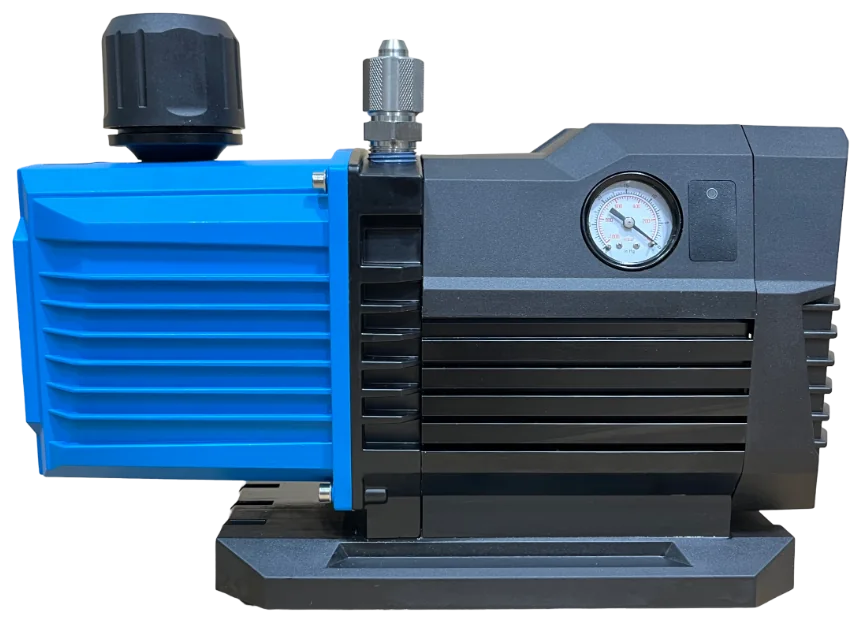
Every freeze dryer we sell comes with Blue Alpine’s premium pump. It’s a rotary vane pump, double-stage and oil-sealed, driven by a 3/4 HP brushless motor and listed on Blue Alpine’s spec sheet at 6.0 or 8.0 CFM. Blue Alpine rates it spark-less and safe for indoor use. Oil-sealed means you’ll be checking and changing oil now and then. The same pump is sold on its own for $672.
A few more pump details worth knowing: an internal anti-backflow valve stops oil running back and seals the system at the end of the cycle, and an analog vacuum gauge is built in. The pump measures 13.9 × 5.4 × 12.3 inches. Its fitting is a 1/2 inch hose barb to 1/2 inch male NPT.
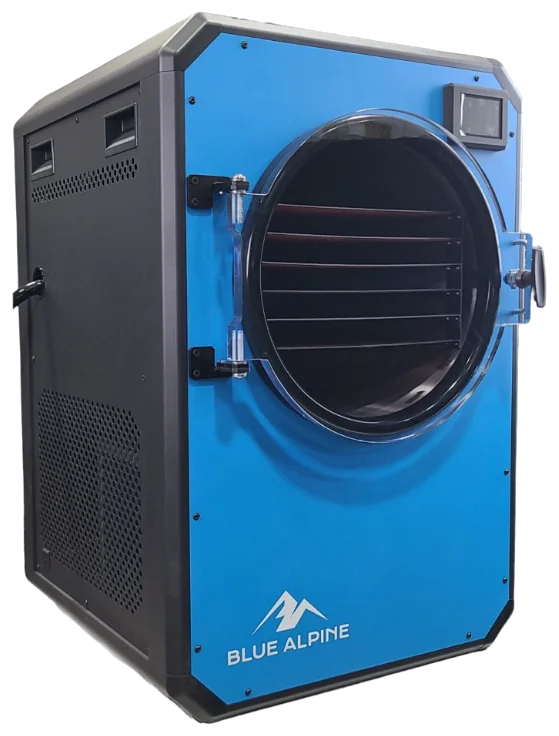
Blue Alpine builds both models in Idaho, on an extruded aluminum frame. The vacuum fittings are barbed, not crimped. Thread joints use gasket material instead of Teflon tape. The door is acrylic, an inch thick, and you can see the food through it the whole time. None of that shows up in a price comparison. It matters more once a freeze dryer has a few years of use behind it and something needs taking apart.
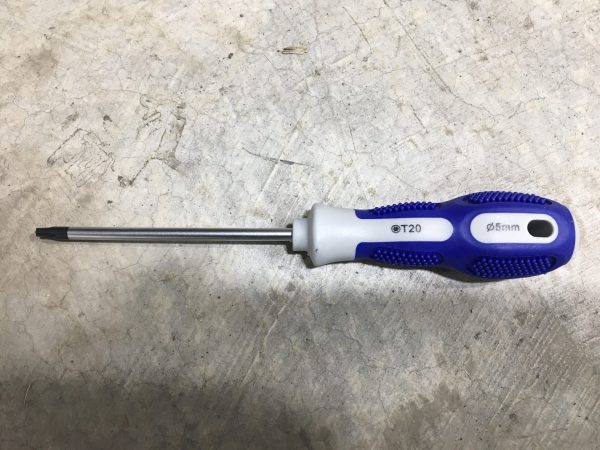
A freeze dryer is a long-term purchase, so look at parts before you buy. We list Blue Alpine parts one by one under their part numbers, from PCB boards and the touch screen down to hose sold by the foot. A failed component can be swapped without replacing the machine. For example, 3M 2097 P100 filters are $19.98 for two, vacuum and drain hose (13 mm inside diameter) is $4.50 a foot, and a T20 Torx screwdriver is $3.91.
Two models. The Medium Select is $2,995, the Large Select $3,995, and the product pages carry the current price. Each freeze dryer comes with:
These are the things you buy again, or buy a second of. They’re all under freeze dryer accessories.
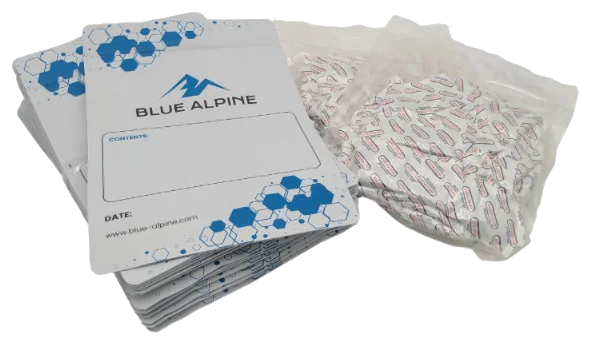
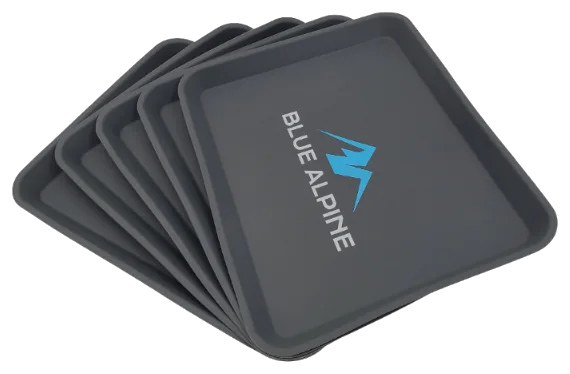
The replacement parts section is split into electronics, body and doors, plumbing and filters, and fasteners and tools. Each part sits under its Blue Alpine part number. The quickest way to find one is to read that number off the old part or out of the manual, then search for it.
The Blue Alpine cotton tee is $10.84 and the logo sticker is $1.25. Neither one dries food.
Electricity is most of what a freeze dryer costs to run. Blue Alpine’s average figures give you a rough cost per pound of fresh food. At $0.15 per kWh over 24 hours of running:
Your rate and your room temperature will move those numbers, and so will what you load. The Large costs more per hour and less per pound, as long as you fill it. After power, you’re buying oil for the pump, plus bags and absorbers.
A cycle runs in three stages. You load the trays and pick a recipe. The software does the rest.
Freezing. The chamber cools until the water in the food is frozen solid, with the fan moving cold air over the trays. Thin, evenly spread food freezes faster, which is one reason not to heap the trays.
Primary drying. The pump lowers the pressure and a little heat goes into the trays. Ice sublimates off the food and the vapor freezes back out on the cold surfaces of the chamber. This is the longest stage.
Final drying. With most of the ice gone, slightly more heat drives off the last moisture held inside the food. When it finishes, check the thickest piece yourself before you bag anything.
After you unload, the frost inside the chamber melts during a defrost and drains away. Wipe the chamber dry and close the drain. The next batch can go in.
Fruit is the easy place to start: strawberries, mango, apple, banana, blueberries. Vegetables come next, like peas, corn, green beans and peppers. Then cooked food, which is where a freeze dryer pulls well ahead of a dehydrator. Soups, stews, chili, pasta dishes, cooked meat and whole portioned meals for camping or an emergency shelf all work. So do cheese, yogurt drops and herbs. Candy puffs up and goes crunchy.
What doesn’t work is anything that’s mostly fat or sugar: butter, honey, jam, syrup. They stay sticky or greasy. Fatty food in general keeps less well, because oils can oxidize on their own.
A lot of it never needs water. Fruit, yogurt drops and candy are eaten dry, straight from the bag. Meals, vegetables and meat need water and a few minutes.
Once you find the right amount of water for a meal, write it on the bag. It saves guessing at a campsite.
If you’re stuck between the two, decide how often you want to run it. Some people would rather run a smaller freeze dryer three times a week than a big one once.
A freeze dryer can turn out more food than you’ll eat in a month, so plan storage before the bags pile up. Start with what you eat most and what you throw away most. Those are the best candidates. Then portion before you dry, so each bag is one meal or one snack and you only open what you need.
Use mylar; bags with a clear front are no good for freeze-dried food. The other option is glass canning jars, which are heavier and breakable but reusable. Label every bag with its contents and date, plus the water it takes. Use the oldest first. The food is light, but a few months of bags fill a closet, so plan for bins somewhere cool and dark.
At 110 to 130 lbs, the machine needs a stable surface that can take its full weight, and two people to lift it. Keep the vents clear and leave space around the cabinet. Blue Alpine rates its pump as spark-less and safe for indoor use. Handle pump oil with care: wipe up spills and take used oil to a collection point. On the food side, everything should be completely dry before it’s sealed. For food safety questions, follow trusted guidance such as the National Center for Home Food Preservation.
An item or two still open is normal. A new outlet can go in while you wait for the machine. Once it arrives, keep the owner’s manual near the dryer, since that’s where the part numbers and settings are. A printed copy is $5 if you’d rather not rely on the PDF.
When you’ll use it. A freeze dryer turns a garden glut or a bulk buy into food that keeps on a shelf, and that cuts waste. It costs more up front than a dehydrator or a canner, and a cycle takes most of a day. It’s worth that for people who run it every week. For someone who’d use it twice a year, it isn’t.
Call us on +1 (443) 514-5708 for help picking a model, or write through the contact page. The Blue Alpine freeze dryers guide has the full side-by-side specs for the two Select models.
Blue Alpine’s average is 12 to 20 hours. Thin fruit is quicker. A full load of stew takes longer, and a warm room adds time.
If you have the counter space and the right outlet, yes. The pump sits next to it and runs for much of the cycle, though, so a utility room or garage is worth considering.
Fully dry and sealed in mylar with an oxygen absorber, a lot of it keeps for years. Fatty food keeps less well. Store the bags somewhere cool and dark.
Measure. The Medium is 30 inches tall and the Large is 34, so check the clearance under your upper cabinets and leave room above for air.
Yes, by Blue Alpine part number. That runs from packs of 10 fasteners up to PCB boards and the touch screen.