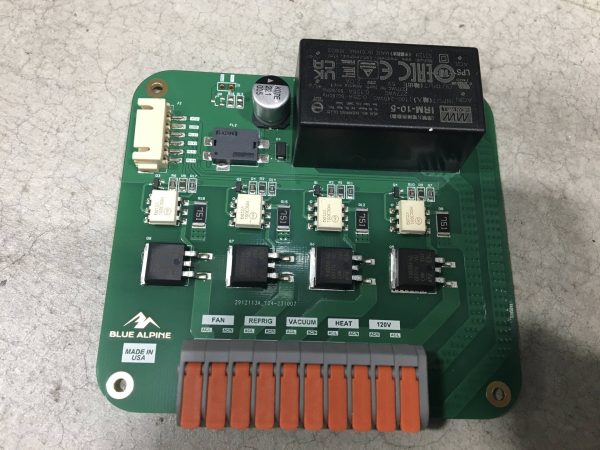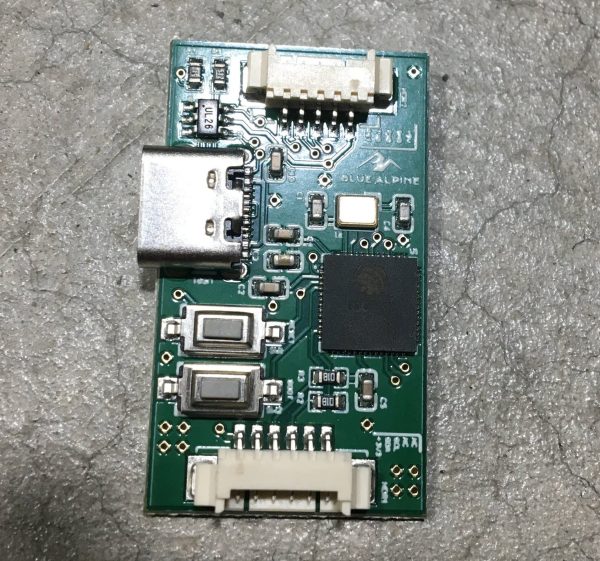
E00131-00
Buffer PCB Board
$24.99
Add
SKU E00116-00
In stock
A disc-type bimetal thermal switch that opens at about 75°C (167°F) and closes again once it cools. Normally closed, 10 A contacts, flange mount, two spade terminals. Blue Alpine part E00116-00.
This thermal switch opens its contacts at about 75°C (167°F) and closes them again once it cools down. It’s a normally closed (NC) disc type with a 10 A contact rating, a mounting flange and two spade terminals. Blue Alpine part E00116-00, $1.78.
Inside the body sits a small disc made from two metals bonded together. They expand at different rates, so as the disc warms it builds up stress until, at its set point, it snaps the other way. That snap pushes the contacts apart. Once it has cooled far enough, the disc snaps back and the contacts close. No electronics, no adjustment screw. The bimetallic strip article explains the physics.
Because it resets itself, this part isn’t the same as a one-shot thermal fuse, which opens once and stays open. If the part you’re replacing never came back after it tripped, check its part number before you assume this one does the same job.
All three should match the old part. A switch that opens at a higher temperature lets things run hotter than intended. A lower amp rating can leave the contacts pitted or welded together. And a normally open (NO) switch does the reverse: it closes when hot. The two types can look identical, so go by the markings on the body or the part number in your manual, not the shape.
Pull at least one wire off the switch first, so you’re measuring the switch and not the rest of the circuit. Set the multimeter to continuity or its lowest resistance range and touch one probe to each spade terminal.
At room temperature, a good NC thermal switch reads closed: close to zero ohms, and the meter beeps. Open while cold means it has failed. Checking the actual trip point is harder. You’d need a controlled heat source and a thermometer, and at under two dollars most people just fit a new one.

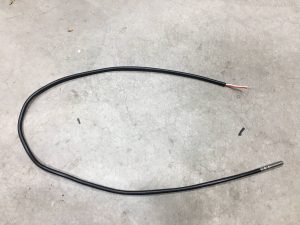
Unplug the machine. Photograph the old switch, its wires and which terminal each one goes to before removing anything. The flange screws hold the disc face against the surface it senses, so clean that surface and seat the new part flat. Found thermal compound under the old one? Use fresh compound on the new one. Push the spade connectors on firmly, because a loose spade heats up on its own and that’s the wrong place for extra heat.
The two flat tabs take push-on female quick-connects. Look at the connectors on your wires while you have them off. Brown, dull or loose ones should be cut off and re-crimped, or the new thermal switch will sit on a bad connection from day one. A good connector takes a firm push to go on and doesn’t wiggle once it’s there.
Then the thermal switch is probably doing its job, and something nearby is running hotter than it should. Never bridge the terminals with a jumper to keep a machine running. That removes the protection entirely. Find the cause first. If you can’t, get in touch with us and describe what you’ve seen, or call +1 (443) 514-5708.
People sometimes order one when they need the other. A PT1000 sensor reports temperature continuously, about 1000 ohms at 0°C and rising roughly 3.85 ohms per degree. A thermal switch has two states, closed or open. Boards such as the Rev 2 power PCB and the rest of our electronics parts are listed with their part numbers.