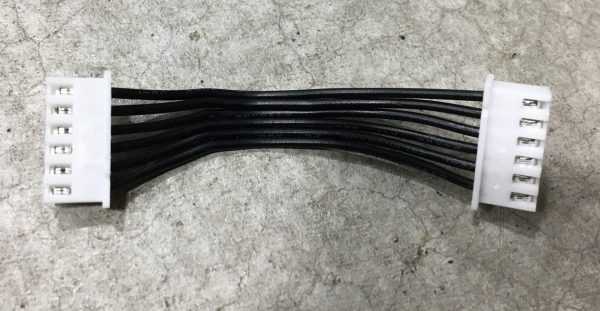
E00110-00
6 Pin XH Cable - 50mm length
$1.99
Add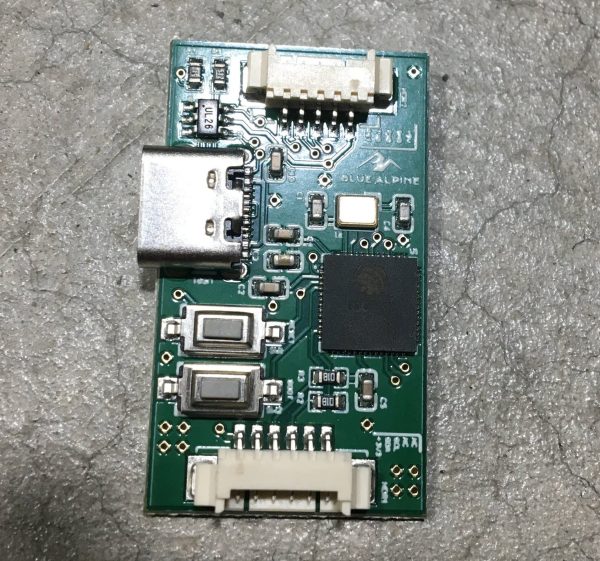
SKU E00131-00
In stock
One Blue Alpine buffer board, part E00131-00: a green circuit board with a USB-C port and several board connectors. Match the part number and connector layout to your old board before you order.
E00131-00 is the buffer board from Blue Alpine’s electronics parts list. As the photo shows, it’s a green printed circuit board with a USB-C port and several board connectors. Price is $24.99. With any replacement circuit board, confirm the part number before you order and handle it carefully once it arrives.
Start with the number. It may be printed on a sticker or in the white silkscreen on your old board, and your owner’s manual parts list should show the buffer board as E00131-00. Next, hold your old buffer board up next to our photo. Count the connectors, see where the USB-C port sits, and compare the outline. If something doesn’t match, stop and check with us before buying.
No number anywhere? Take sharp photos of both sides of the old board with every connector in view, and send them in. We’ll compare them against what we stock.
In electronics, a buffer is a circuit stage that passes a signal along while keeping the two sides from dragging each other down. Buffers are often used to give a weak signal enough drive for a longer cable run, or to keep a sensitive part separated from the rest of a circuit. That’s the general meaning of the word. Exactly what this buffer board handles inside the dryer isn’t something we publish, and you don’t need to know it to swap one. The printed circuit board article on Wikipedia covers the basics of how boards are built.
Board connectors nearly always have some sort of lock. Small wire-to-board plugs often have a latch you press before pulling. Flat ribbon and FPC connectors have a hinged or sliding bar that has to be opened first. Pull on the plug body, never the wires, and pull straight. Rocking a connector side to side is how pins bend and solder joints crack. If one won’t come free, look again for a tab you missed.
Hold the buffer board by its edges. Keep your fingers off the chips and connector pins. Line it up on its mounts the way the old one sat, and start any screws by hand so nothing cross-threads. Snug, not tight.
Then reconnect everything from your photos. Each plug should go fully home and square, with any latch clicked over. A connector sitting one row off, or only halfway on, can look right at a glance. Go over each one with a flashlight before you close up.
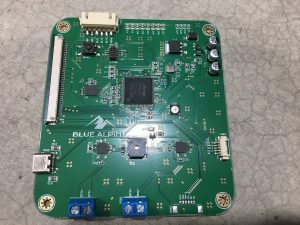
Two more boards from the same parts list:
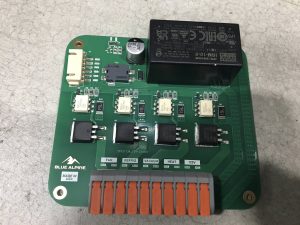
If a new buffer board goes in and nothing changes, the fault is probably somewhere else: a cable, a connector, a sensor or another board. Recheck the basics before ordering anything more. Every plug fully seated. No pins folded over. No cable in the wrong socket. Jumper cables deserve a close look too, since a cracked crimp or a wire pulled partway out of its housing is easy to miss. We sell some of those separately, such as the 6 pin XH cable (E00110-00).
After that, tell us what’s going on. The useful details are what the machine shows or does, when in a cycle it happens, and what you’ve replaced so far. Reach us at +1 (443) 514-5708 or through our contact page. Every freeze dryer circuit board and wiring spare we carry is in the electronics category.


