
F00105-00
1/4-20 x 1-1/2 Pan Head T30 Torx Stainless Bolt (qty x10)
$10.49
Add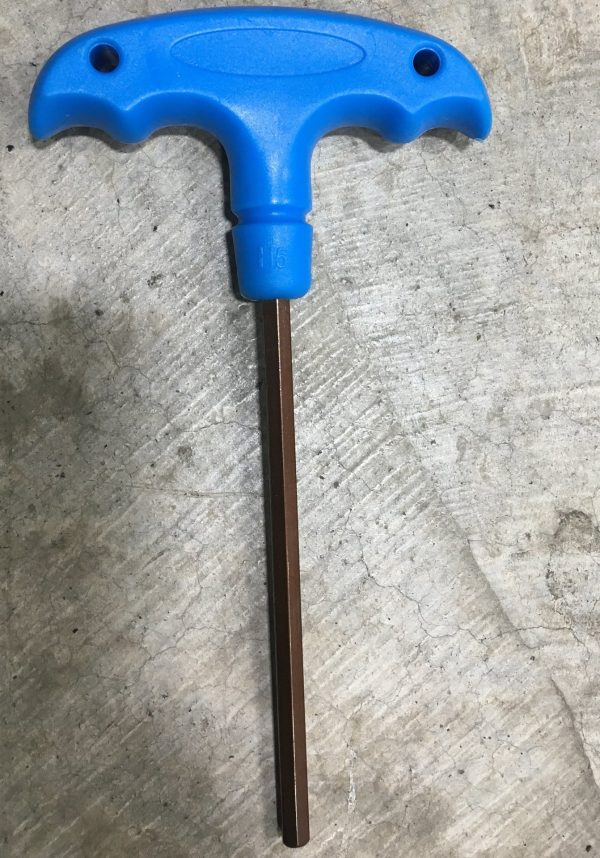
SKU A00112-00
In stock
A 5mm hex key on a blue loop T-handle, Blue Alpine part A00112-00. The T grip lets you spin screws in fast and tighten with your whole hand. Fits 5 mm hex sockets, measured across the flats.
A 5mm hex key on a blue loop T-handle: Blue Alpine part A00112-00, $3.89. The shaft is a 5 mm hex, and the handle gives you a full-hand grip instead of the little L-bend you get on a basic Allen key.
Hex keys are measured across the flats, meaning the distance between two opposite flat sides of the hexagon. This one is 5 mm flat to flat, and it fits a 5 mm hex socket. That’s all the number tells you.
It doesn’t tell you the screw’s thread size directly. On standard metric socket head cap screws, a 5 mm socket goes with the M6 thread. Button head and countersunk screws of that same thread usually take a smaller key, though. So size the socket in the head, not the screw.
To check an unknown socket, try keys from a set until one goes in snug, or measure across the flats with the inside jaws of a caliper. Clean it out first, or the reading will be off.
This is the one people trip over. A 3/16 in key measures 4.76 mm, near enough to slide into a 5 mm socket and loose enough to round the corners off once you lean on it. Going the other way, a 5mm hex key simply won’t enter a 3/16 in socket.
The test is the wobble. Seat the key and twist it gently back and forth without turning the screw. A matching key has almost no play. If it rocks noticeably before it bites, stop and find the right size before you strip something.
Plain L-shaped keys are cheap, reach into tight corners and let you pull hard on the long arm. Speed is where they fall down. With the short end in the screw, there’s little for your fingers to hold, and backing out a long screw takes a lot of small, fiddly turns.
On this 5mm hex key, the T-handle puts the grip in your palm. Spin the screw in quickly with your fingers on the loop, then wrap your hand around it for the last bit of tightening. You get more control over how hard you’re pulling, which is half the battle with small fasteners. The blue handle is also easier to spot on a cluttered bench.

Check the tip now and then. Sharp corners on the hex mean it’s fine. Rounded corners or a twisted end mean it’s time for a new one, because a worn 5mm hex key damages every socket it goes into. At $3.89, replacing it is cheaper than drilling out a stripped screw.
A tip tends to wear from use at an angle or from being forced into dirty sockets. Treat the fresh one a little better.
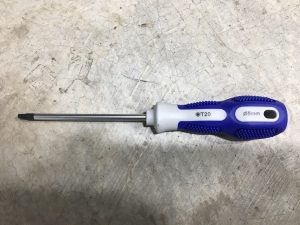
Tools that live in a kitchen drawer have a way of wandering off. Hanging the 5mm hex key on a hook, or keeping it in a small box with the T20 screwdriver and your spare parts, means it’s there when you need it.
The hex key article covers the sizing standards and history if you’re curious. For screws, nuts and other drivers, see fasteners and tools. Can’t tell what size socket you’re dealing with? Measure it if you can, then drop us a line through the contact page and we’ll help you work it out.


