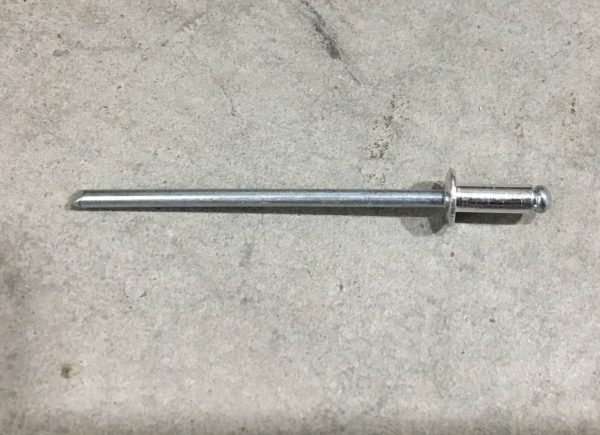
F00112-00
Rivet - 2.4mm (3/32") (qty x10)
$2.50
Add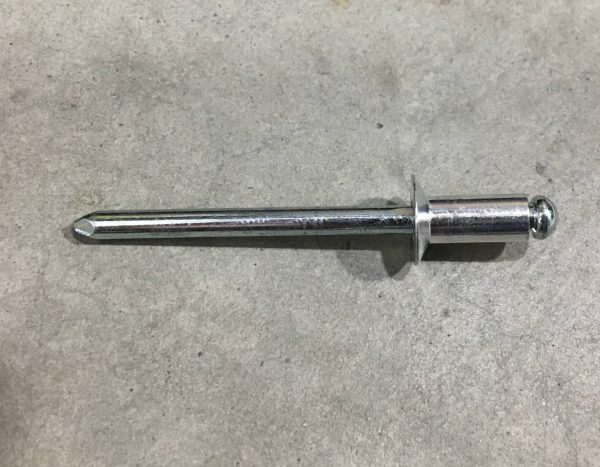
SKU F00124-00
In stock
Ten blind rivets in the 3/16 rivet size (4.8 mm) for joining 1/8 to 1/4 in of total material. Set from one side with a hand rivet tool. Blue Alpine part F00124-00.
A 3/16 rivet is the 4.8 mm size, and this pack gives you ten of them rated for a grip range of 0.125 to 0.25 in. They’re blind rivets, the kind you set from one side with a hand rivet tool. Blue Alpine part F00124-00, $2.50 for the pack.
Grip range is the total thickness of material a rivet can clamp. For this one that’s 0.125 to 0.25 in, which is 1/8 to 1/4 in, or about 3.2 to 6.4 mm.
Add up every layer the rivet passes through. Two pieces of 1/16 in sheet make 1/8 in, right at the bottom of the range. A 3/16 in bracket on 1/16 in sheet is exactly 1/4 in, the top. Gaskets, shims and spacers in the stack all count. Squeeze the layers together and measure with calipers, since a gap between them reads as extra thickness.
If you’re right on a limit, measure twice. Outside it, you need a different rivet, not more force.
The standard drill is a #11 (0.191 in). A 3/16 in bit (0.1875 in) also works, and it’s the one most people already own. Both give the rivet a close fit, so it swells evenly when set. Anything bigger lets it set off-center.

Any hand riveter with a 3/16 nosepiece will set these, but this is the top size for a lot of basic squeeze-handle tools. You’ll feel it in your hand. A lever riveter with long arms, or a two-handed model, makes the job much easier if you’ve got more than a couple to do.
Fit the nosepiece, slide the rivet’s mandrel into it as far as it goes, then put the rivet in the hole and hold the tool square to the surface. Squeeze, open the handles fully and squeeze again; the jaws take a fresh bite on the mandrel each time. Keep going until the mandrel snaps. A tilted tool is a common reason a rivet sets crooked.
The listing doesn’t state what the body and mandrel are made of. If that matters, for example when joining stainless sheet, call us on +1 (443) 514-5708 before you order.
Look at both sides before you move on. The head on the front should sit flat, with no light under its edge. On the back, the body should have spread into a short, even collar against the material. Then try to turn the head with your fingers. A good 3/16 rivet won’t move. One that spins or rocks is loose, and the cure is to drill it out and set a new one, not to squeeze it again.
Don’t pry the head. Center punch the mandrel hole, then drill with a 3/16 in bit. Go only deep enough for the head to spin free and lift off. Then push the rest of the body through with a punch. Using a bigger bit is tempting, but it enlarges the hole, and then a 3/16 rivet won’t fit tight anymore.
Rivets are permanent. If the part needs to come off for service, a screw into a threaded insert is the better choice. The M4-2 clinch nut presses into sheet to give you an M4 thread, and the rest of our fasteners and tools are listed together. There’s a useful overview of rivet types on Wikipedia.


